The Podcast
Health. Wealth. Happiness.
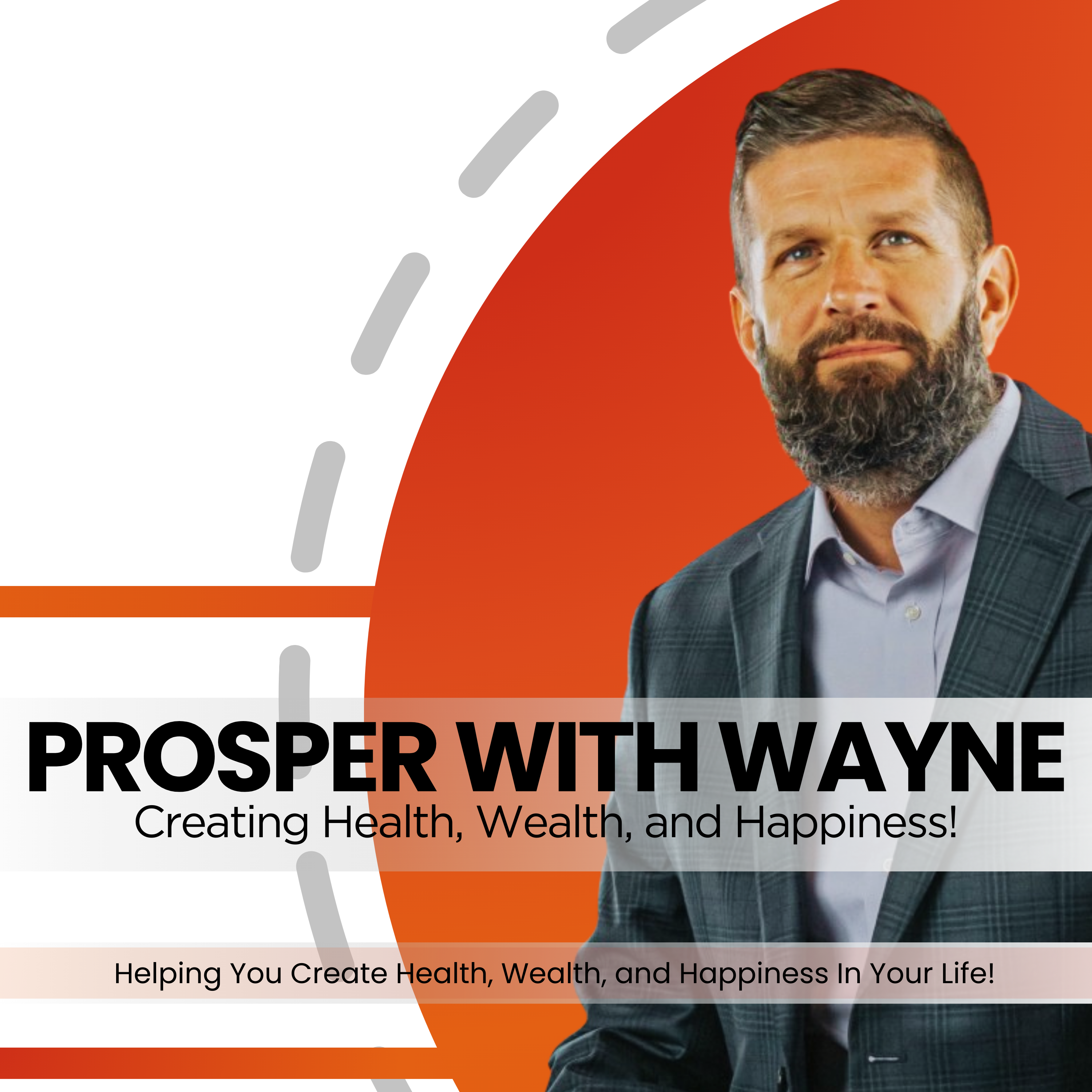
Prosper With Wayne is a podcast dedicated to helping you create lasting health, build real wealth, and experience true happiness. Each week, host Wayne Sutton sits down with inspiring guests—entrepreneurs, health experts, and everyday achievers—who have faced challenges, taken bold risks, and designed lives of purpose and abundance.
Latest episode · Oct 25, 2026
12 Simple Life Changes I Made to Finally Be Happy
12 Simple Life Changes I Made to Finally Be Happy Please Like, Comment, & Share!
Episode pageRecent episodes
View all 42 →Why Walking Beats Almost Everything You’re Buying for Your Health
Why Walking Beats Almost Everything You’re Buying for Your Health In this episode, Wayne explains why walking may be the most underrated health habit and shares five ways it can support your heart, blood sugar and energy, mood, sleep, and joints. He covers how much to aim for, a simple seven-day starter plan, tips to make the habit stick, and safety notes.
ListenWHY YOU'RE ALWAYS TIRED: 7 EVERYDAY HABITS DRAINING YOUR ENERGY
WHY YOU'RE ALWAYS TIRED: 7 EVERYDAY HABITS DRAINING YOUR ENERGY
Listen7 MONEY HABITS THAT KEEP GOOD PEOPLE STUCK (A BIBLICAL LOOK)
Many faithful, hardworking people feel financially stuck, and often it isn't a lack of faith. It's a handful of ordinary habits nobody talks about. In this episode, Pastor Wayne breaks down seven of them: spending without a plan, living on credit, living without margin, spending to impress, waiting for a miracle instead of building, refusing counsel, and hoarding instead of giving. Each habit comes with Scripture and one practical step, plus a simple 7-day start you can begin right away. Wayne also grounds the conversation in current numbers. The New York Fed reports that U.S. household debt reached about $18.77 trillion in the second quarter of 2026, with credit card balances around $1.26 trillion. And a Bankrate survey reported in January 2026 found that fewer than half of Americans have the liquidity to cover an unexpected $1,000 expense. The heart of the episode comes from 3 John 2: God wants things to go well with you, and that includes your finances. Key Scriptures3 John 2: "...that all may go well with you and that you may be in good health, as it goes well with your soul."Proverbs 21:5: plans of the diligent lead to abundanceLuke 14:28: count the costProverbs 22:7 and Romans 13:8: the borrower and the lender, and owing no oneProverbs 21:20, Proverbs 6:6-8, Genesis 41: storing up and preparingProverbs 13:7, Ecclesiastes 4:4, Luke 12:15: pretending to be rich, envy, and covetousnessProverbs 14:23 and Deuteronomy 8:18: toil brings profit, and God gives the power to get wealthProverbs 15:22, Proverbs 12:15, Hosea 4:6: counsel and knowledgeProverbs 11:24-25, Luke 12:15-21, 2 Corinthians 9:6-8: generosity and the rich foolYour 7-day startWrite down what comes in and what goes out.List every debt, its balance, and its interest rate.Start a small emergency fund. Even $25–$50 a week adds up.Wait 24 hours before any non-essential purchase.Pick one skill that could raise your income, and spend 30 minutes a day on it.Ask someone who handles money wisely for 20 minutes of their time, and bring three questions.Decide ahead of time what you'll give, and give cheerfully.Numbers mentioned in the episode$18.771 trillion: total U.S. household debt, Q2 2026 (Federal Reserve Bank of New York, released August 11, 2026)$1.263 trillion: credit card balances, Q2 2026, up $21 billion from Q1 and $54 billion from a year earlier (same source)Fewer than half of Americans have the liquidity to cover a $1,000 emergency, and about a third would go into debt (Bankrate survey, reported by the ABA Banking Journal, January 2026)Links and resourcesNew York Fed Q2 2026 household debt report: https://www.newyorkfed.org/newsevents/news/research/2026/20260811ABA Banking Journal on the Bankrate emergency-savings survey: https://bankingjournal.aba.com/2026/01/survey-most-americans-would-struggle-to-cover-an-emergency-expense/Connect with Pastor Wayne: [ADD YOUR WEBSITE / BOOKING LINK]Previous episode: [ADD LINK to "The Truth About Praying for Money"]Support the show: [ADD LINK, if you have one]Call to actionIf this helped you, share it with someone who feels stuck, subscribe so you don't miss the next episode, and leave a comment telling me which of the seven habits hit you the hardest. I read every one. DisclaimerThis episode is for education and encouragement only. It is not personalized financial, tax, or legal advice. Please consult a qualified professional about your specific situation.
ListenThe Scarcity Trap: Why Your Brain Sabotages Wealth Before You Even Start
Why does the same smart, capable person make objectively bad financial decisions under pressure? It's not a willpower problem — it's bandwidth. Wayne breaks down the real psychology of scarcity and what to actually do about it. Full episode description: Wayne Sutton breaks down the behavioral science behind why financial scarcity doesn't just limit your options — it changes how your brain processes every decision in front of you. Drawing on research from economist Sendhil Mullainathan and psychologist Eldar Shafir, Wayne explains the "bandwidth tax" scarcity places on the mind, why it can cost the cognitive equivalent of a full night's lost sleep, and how "tunneling" causes otherwise smart people to make short-term decisions that look irrational from the outside. He closes with practical, systems-based ways to reduce the bandwidth tax before scarcity hits — and ties it back to the mindset work from earlier episodes on reframing and belief. In this episode: Why financial scarcity is a cognitive problem, not a character problemThe "bandwidth tax": how scarcity measurably reduces decision-making capacity"Tunneling" — why urgent problems make you blind to easy, important fixesWhy most financial advice fails the people who need it mostPractical systems to build before scarcity hits, so you're not relying on willpower in the momentHow this connects to the reframing and mindset work from previous episodesTimestamps: 00:00 — Why less money means worse decisions (and why that's not your fault) 01:30 — The Bandwidth Tax: what the research actually found 07:00 — Tunneling: why urgent problems hide the important ones 13:00 — Why willpower isn't the fix — and what actually works 19:00 — This week's challenge + what's coming next Resources mentioned: Scarcity: Why Having Too Little Means So Much by Sendhil Mullainathan & Eldar Shafir
ListenWhy Smart People Believe Wrong Things
Why Smart People Believe Wrong Things Wayne Sutton breaks down why intelligence can actually make bias more dangerous, not less. He explores confirmation bias, tribal thinking, authority, social proof, and the discomfort of admitting when you are wrong. This episode is a practical reminder that beliefs shape decisions, and decisions shape outcomes. Wayne closes with five questions listeners can use to test their thinking and get closer to what is true. Key topics In this episode, Wayne explains why the brain often works more like a lawyer than a judge, building arguments for what it already wants to believe. He defines confirmation bias as the tendency to notice, seek, and remember evidence that supports an existing belief. Wayne shows how the internet makes confirmation bias easier by giving almost any belief a ready-made community. He shares how intelligence can become a tool for rationalization, using the example of wanting an expensive car and then building reasons to justify it. He explains that beliefs are often identity markers, which is why disagreement can feel personal rather than intellectual. Wayne uses sports fandom to illustrate tribal thinking, where the same evidence is judged differently depending on which team is involved. He warns that authority, credentials, fame, and social proof can short-circuit careful thinking if we treat them as proof instead of signals. He argues that people hate losing more than they love being right, which is why saying “I was wrong” is so hard and so powerful. He notes that memory is reconstructive, not a perfect recording, which matters especially in relationships and conflict. Wayne gives five questions to test a belief: what evidence would change my mind, am I looking for truth or confirmation, what is the strongest argument against my position, would I believe this if the other team said it, and what if I am wrong?
ListenHow To Change Your Reality WIth Words
Hope, Reframing, and Why Meaning Changes Everything Wayne Sutton shares a solo episode on how reframing shapes resilience, behavior, and hope. He explains why two people can face the same event and walk away with completely different outcomes, depending on the meaning they assign to it. The episode matters because it connects mindset to real-world results, from stress and decision-making to health and action. Wayne also ties the idea to cognitive reappraisal research, then closes with a practical challenge for protecting your attention and rebuilding hope. Key topics In this episode: Wayne defines hope as more than optimism and makes the case for reframing without denying reality. He explains how meaning drives response - not just the event itself. Wayne uses a simple workplace example: one boss call can trigger fear of being fired, while another person sees a new project opportunity. He describes how humans are wired to notice threats, which made sense for survival but now gets amplified by email, news, social media, and constant alerts. He argues that modern media and algorithms reward fear, outrage, and conflict, which can overload the brain with suffering from the entire world. Wayne clarifies that reframing is not denial. Losing a job, for example, is still painful, but the question becomes: what else could this mean? He introduces cognitive reappraisal and cites research showing a strong association between reappraisal and psychological resilience. Wayne emphasizes a key principle: stop turning temporary events into permanent identities. A failed business is not the same as being a failure. He references research connecting optimism with lower cardiovascular risk and lower all-cause mortality, while noting that the data is observational. Wayne shows how mindset changes behavior: hope can lead to action, while hopelessness tends to produce withdrawal and surrender. He anchors the message in faith, saying biblical hope acknowledges darkness but refuses to let darkness have the final word. He gives a practical reframe: instead of asking, “Why is this happening to me?” ask, “What can this develop in me?” He ends with a 24-hour negativity fast and a set of questions to help listeners separate facts from fears and choose their next move.
Listen